
Prep-less veneers in Telford, and what that actually means
Thin porcelain veneers planned to remove as little tooth as your case allows, with a trial smile you wear home before anything is permanent. Minimal preparation does not always mean no preparation, and you will hear that straight.

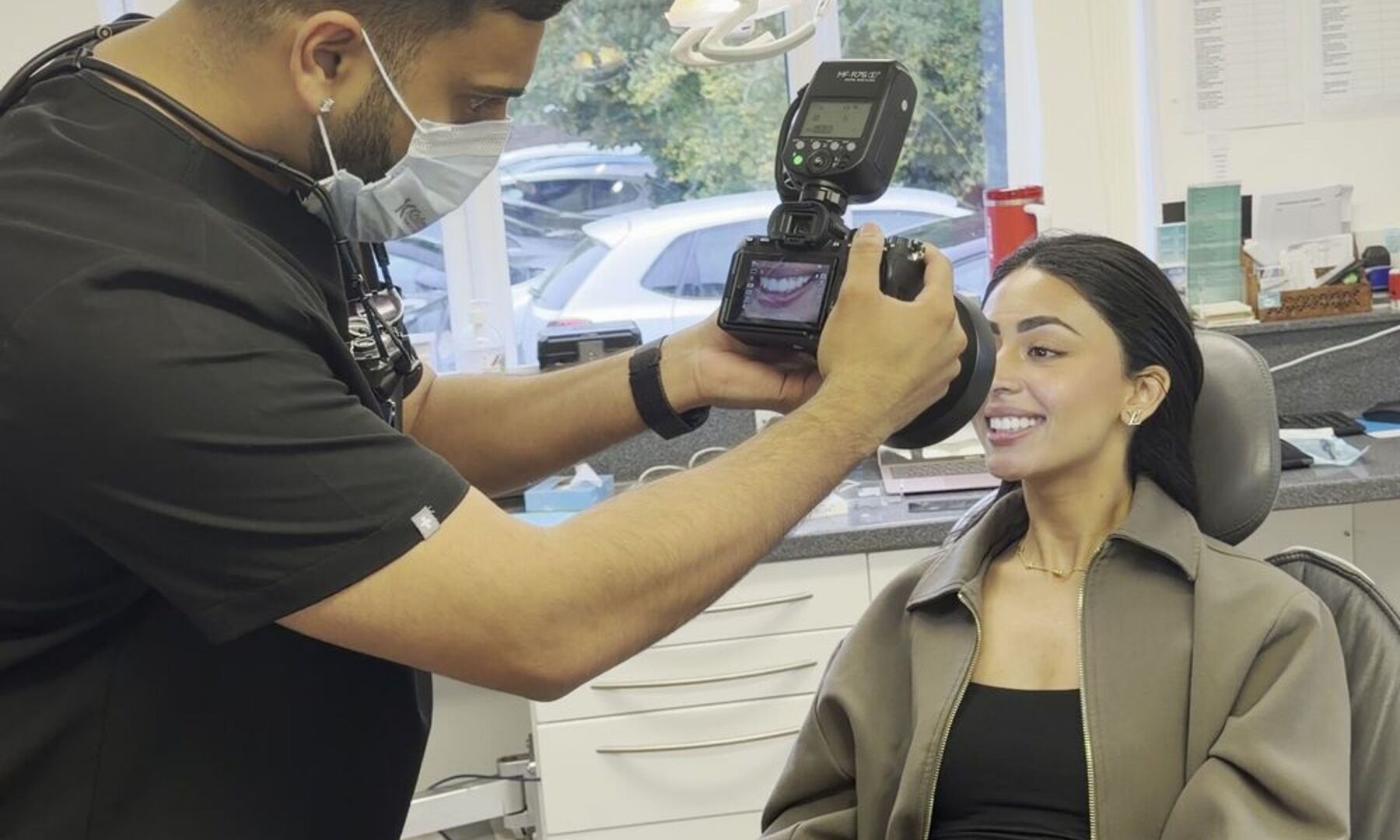
Nothing removed to make a sale easier
Prep-less veneers are one of the things Cameron is asked about most, and they are also the thing most often misdescribed online. So here is the plain explanation before anything else.
A veneer is a thin, custom-made porcelain shell bonded over the front of a tooth. Prep-less, or minimal preparation, means the veneer is designed to be thin enough that little or no tooth surface has to be removed to fit it. On the right teeth, that is genuinely possible and it is a very good thing. On other teeth it is not possible, and pretending otherwise leads to bulky, obvious veneers or to enamel being removed anyway without the patient having been warned.
Cameron will tell you which of those you are, after he has examined and scanned your teeth. Not before.
Who prep-less veneers genuinely suit
Teeth that are slightly small, short or worn, where adding a thin layer improves the proportions
Small gaps and mildly uneven edges
Teeth that are already reasonably well aligned, or have been aligned first
Shade changes within a sensible range of your natural colour
And who they do not
Teeth that are noticeably crowded, rotated or protruding. Veneering over a tooth that is out of position means adding bulk to hide it, and it looks like it.
Heavily stained or very dark teeth. Ultra-thin porcelain is slightly translucent, so what is underneath still shows through. Covering that reliably needs more thickness, which means more preparation.
Teeth that are already large or prominent, where adding to the front surface makes them more so.
Teeth with significant existing restorations, decay or gum disease, which get sorted first.
If you fall into the second group, the usual answer is not no. It is a different order: align the teeth first, then whiten, then reassess. Very often what looked like a ten-veneer case becomes a much smaller one.
Six things worth knowing before you book
A trial smile comes first
The design is printed and fitted so you can wear it home. Shape and shade get settled before porcelain is made.
Preparation is confirmed after assessment
Not from a photograph, not over the phone, and not on Instagram.
Where preparation happens, it is not reversible
Said plainly because it matters more than anything else on this page.
Porcelain resists staining well
Better than composite. The natural teeth and margins around it can still change over time.
They are not lifetime restorations
Veneers can chip, fracture or debond, and eventually they need replacing.
Whitening is included with veneer treatment
Timed before the porcelain is made, because porcelain does not lighten afterwards.
Porcelain, or composite?
Neither is the right answer for everyone, and Cameron provides both, so there is no commercial reason for him to push you towards either.
There is a page setting the two out side by side, honestly, including what each costs over ten years rather than today.
Four steps, and a smile you wear before you commit
There is no online diary here on purpose. You leave your number, treatment coordinator Ellie rings you back, and the appointment gets shaped around what you actually need.
Request a consultation
Ask for a callback
Five fields, no card details and no medical history before anyone has spoken to you.

Ellie calls you back
She works out whether a cosmetic consultation or a full clinical assessment is the right starting point.

Assessment, design, trial smile
X-rays, photographs and an iTero scan, then a design printed and fitted so you can live with it.
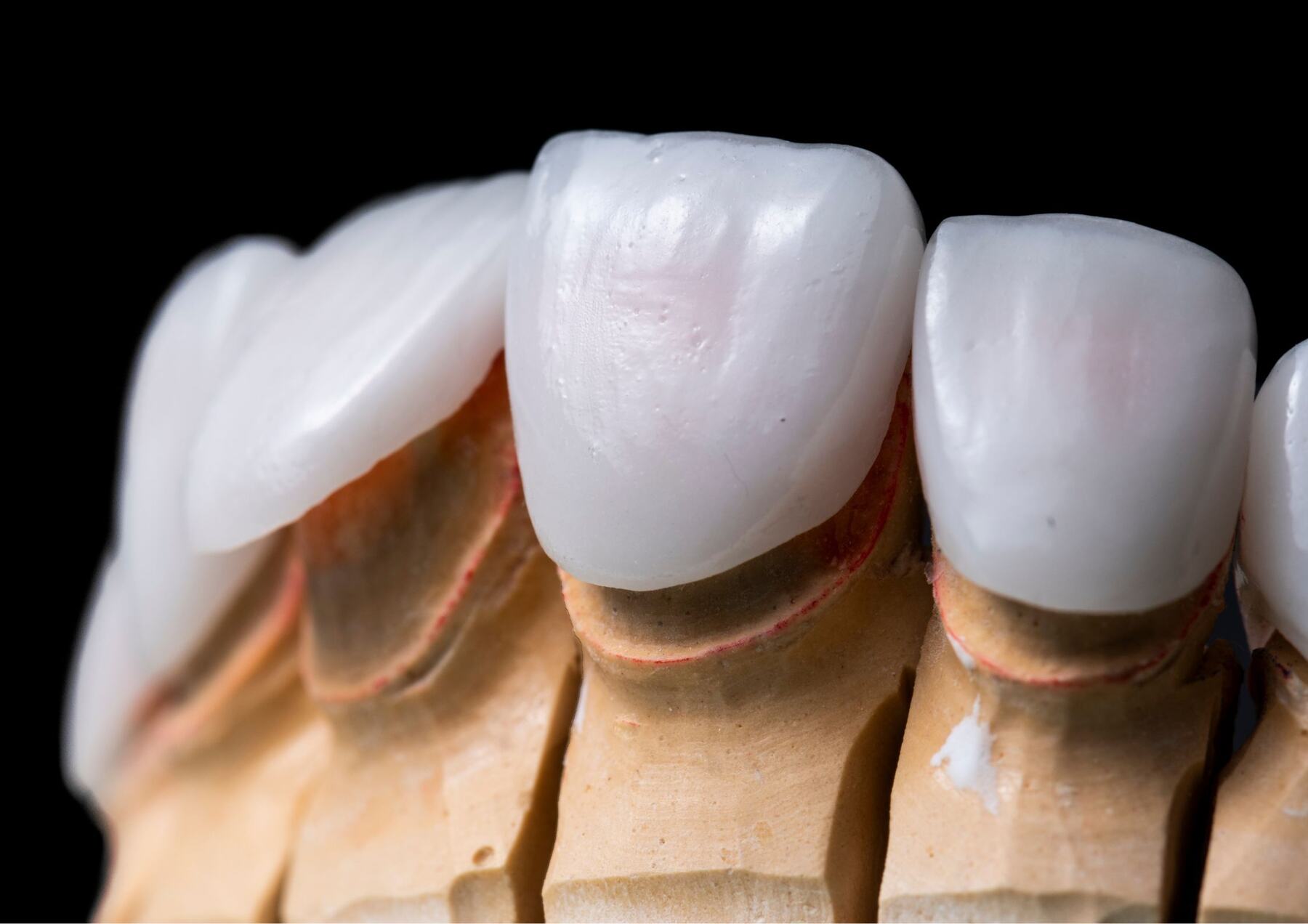
Porcelain made to what you approved
Fitted, checked and adjusted, with the aftercare explained properly.
What prep-less veneers cost in Telford
Veneers are priced per tooth and the total depends on how many are being treated, so a fixed figure follows your clinical assessment. Every from-price sits on one page, finance is available through Chrysalis, and both consultation fees come off your treatment.
See prices and financeWhy veneers cost more than abroad
People ask, so here is the straight answer. Most of the gap is not the porcelain, and often the two quotes are not even for the same treatment.
If you have already been and you are not happy, come and have it looked at. No commitment, and no lecture.
Request a consultationYou may be quoted for crowns, not veneers. A veneer covers the front of a tooth. A crown means reducing it on every surface first, which is what produces those photographs of small pointed teeth. Get it in writing which one you are being offered.
Aggressive preparation risks the nerve. A tooth prepared that heavily can need root canal treatment later, and if a crown then fails there may not be enough tooth left to restore.
Irreversible work gets compressed into days. Planning, a trial smile and time to change your mind do not fit into a long weekend.
The regulation does not travel with you. In the UK only General Dental Council registrants may practise dentistry, all must carry indemnity, and practices are inspected. You can check Cameron on the GDC register before you come anywhere near the chair. His number is 318684. Abroad, your complaint routes do not apply.
Repairs come back to you. A BDA survey found most UK dentists seeing remedial bills of at least £500, some running past £5,000, and that work is harder without the original records, shade information or laboratory.
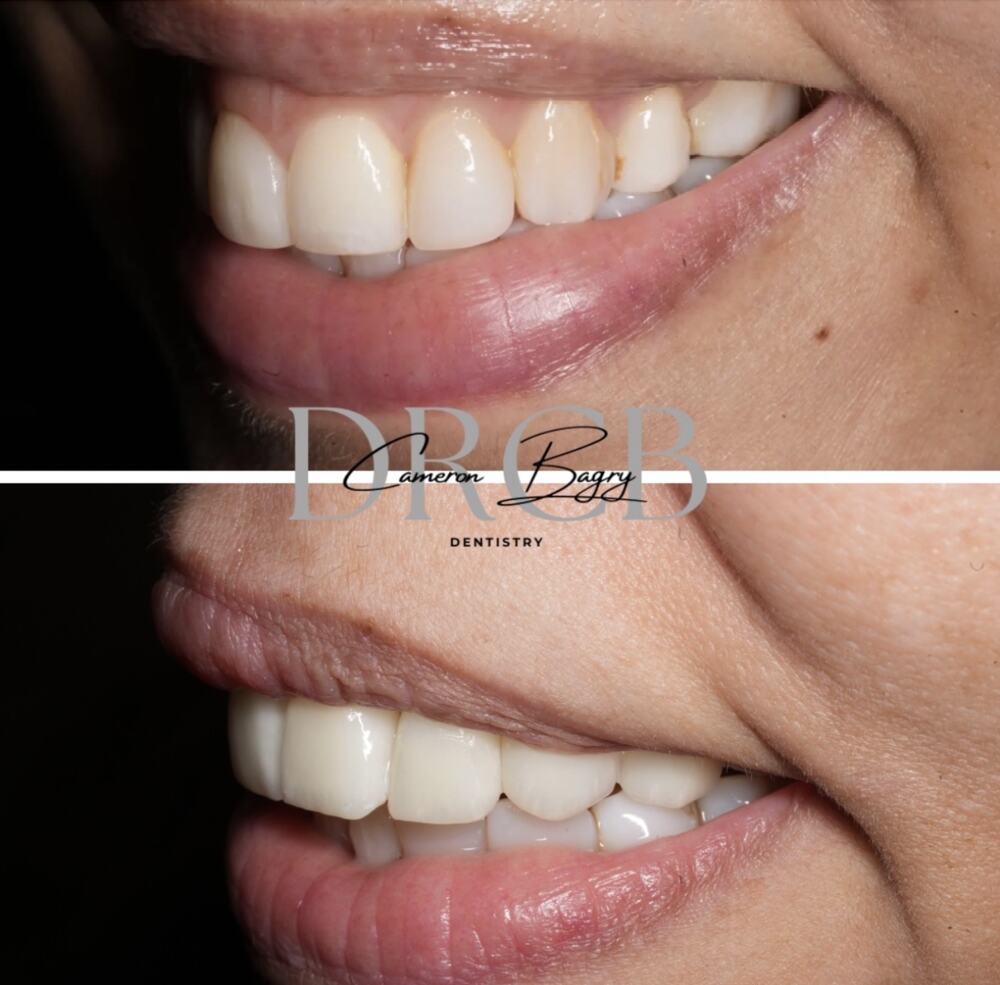
Veneer before and afters
Labelled honestly, including where alignment or whitening formed part of the same case.
See the full gallery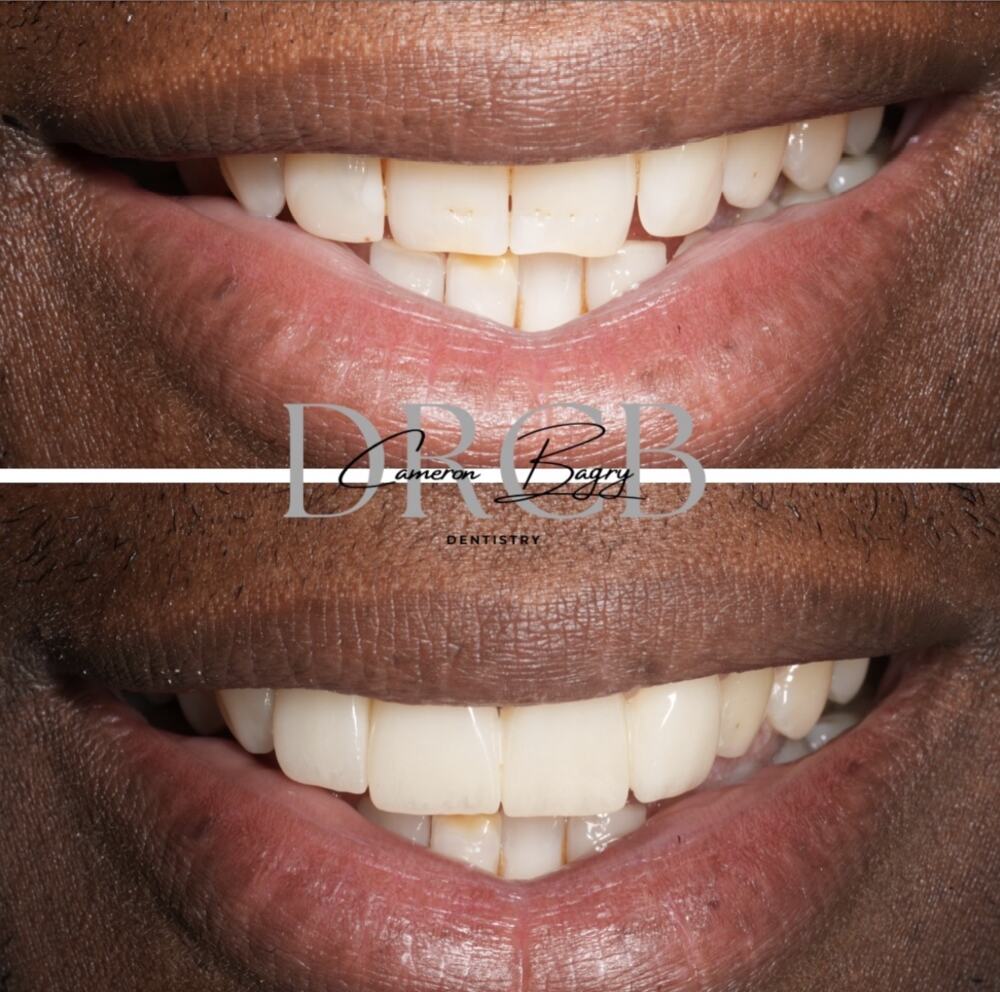


Meet your cosmetic dentist, Dr Cameron Bagry
Cameron is a cosmetic and restorative dentist in Telford. He holds a postgraduate diploma in cosmetic and restorative dentistry and a diploma in minimally invasive dentistry, and Totally Composite, one of the UK’s most respected bonding courses, asked him to be a clinical tutor teaching the technique to other dentists.
He plans every case himself, and seven of the nurses at his own practice have chosen to be treated by him, which is the review he is proudest of. He will also tell you when a smaller plan, or no treatment at all, is the better answer.
The questions patients actually ask about veneers
If yours is not here, ask treatment coordinator Ellie when she rings, or call us. Nobody minds.
Not here, and the images that phrase comes from are almost always crowns rather than veneers, usually done abroad at speed. Cameron works to remove as little as the case allows, and on suitable teeth that can mean very little or none at all. What he will not do is promise you zero preparation before he has looked. How much is needed depends on the position of your teeth, the enamel you have, any existing fillings, your bite and the result you want, and he will tell you exactly what he proposes before you agree to anything.
Where any tooth preparation is required, no. That part is permanent and the teeth will always need something covering them afterwards. Where a genuinely prep-less approach is possible, far more of your own tooth is preserved, but it is still a considered decision rather than something to try out.
They should not, and the trial smile is there so you can make sure. Shape, length, shade and translucency are all designed around your face, and you approve them before the porcelain is made. Most patients want a result nobody can point at.
It depends how dark. Thin porcelain is slightly translucent, so a very dark tooth underneath can still show through. Covering heavy staining reliably needs more thickness, which means more preparation, so there is a genuine trade-off. Sometimes whitening or internal whitening first solves most of the problem and makes a thinner veneer possible.
They are not lifetime restorations and nobody can give you a guaranteed figure. Longevity depends on your bite, whether you grind, your gum health and how you look after them. They can chip, fracture or debond. Careful planning and a nightguard where one is recommended reduce the risk considerably.
Porcelain resists staining well, better than composite does. What can change over time is the natural tooth around the edges, the margins, and any other dental work nearby.
It depends on how many teeth show when you smile and talk, and how the treated teeth will blend with the ones next to them. Cameron will take what you want into account, but the number is a clinical judgement rather than something to pick from a list.
Depending on the case, a small chip can sometimes be repaired, and sometimes the veneer needs replacing. Cosmetic work carries a twelve-month warranty as standard and the cosmetic warranty plan extends that to five years.
Start with a conversation, not a drill
Leave your number and treatment coordinator Ellie rings you back. Between you, you work out what you actually need, and nothing is booked until you want it to be.