
Teeth whitening in Telford, without the fake white
Boutique whitening with custom trays made from a digital scan, used at home over about two weeks. Prescribed and supervised by Dr Cameron Bagry, and included with Invisalign and veneer treatment.

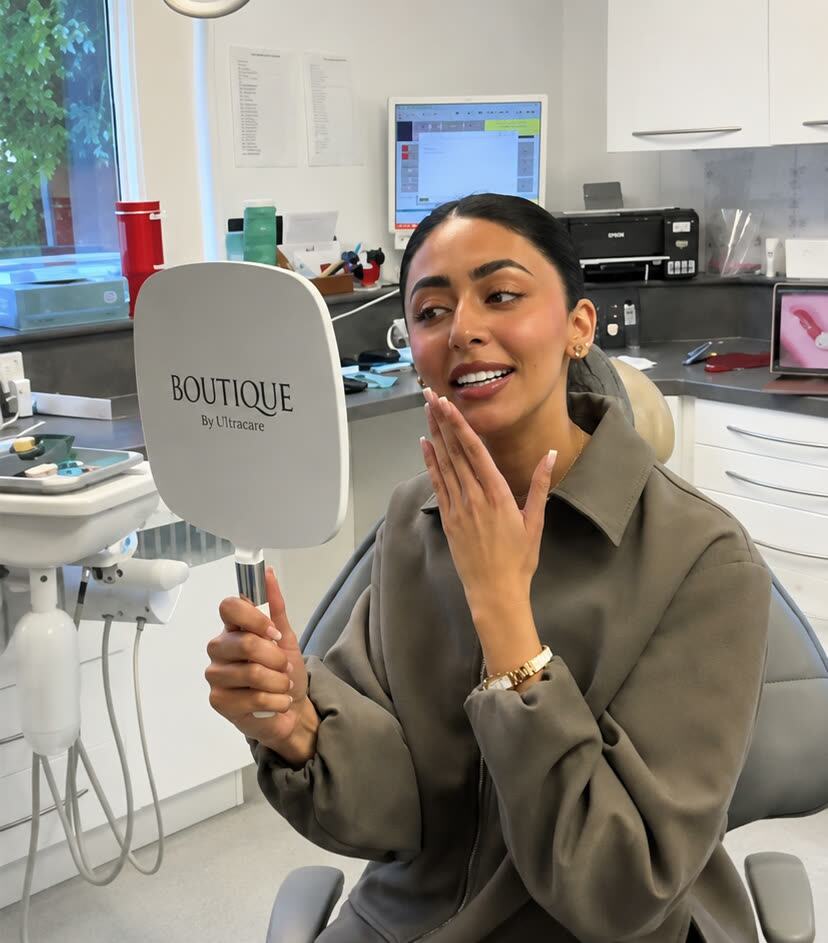
The cheapest thing that changes everything
Whitening is usually the first thing people try, and for a lot of them it is also the last thing they need. Teeth darken slowly enough that you do not notice it happening, and lightening them back is often the entire fix for a smile somebody had convinced themselves needed veneers.
It is also the least invasive thing in cosmetic dentistry by a distance. Nothing is removed, nothing is added, and nothing about your teeth is permanently altered. If you are at the beginning of thinking about your smile, this is a sensible place to start.
How teeth whitening works with Cam
Request a consultation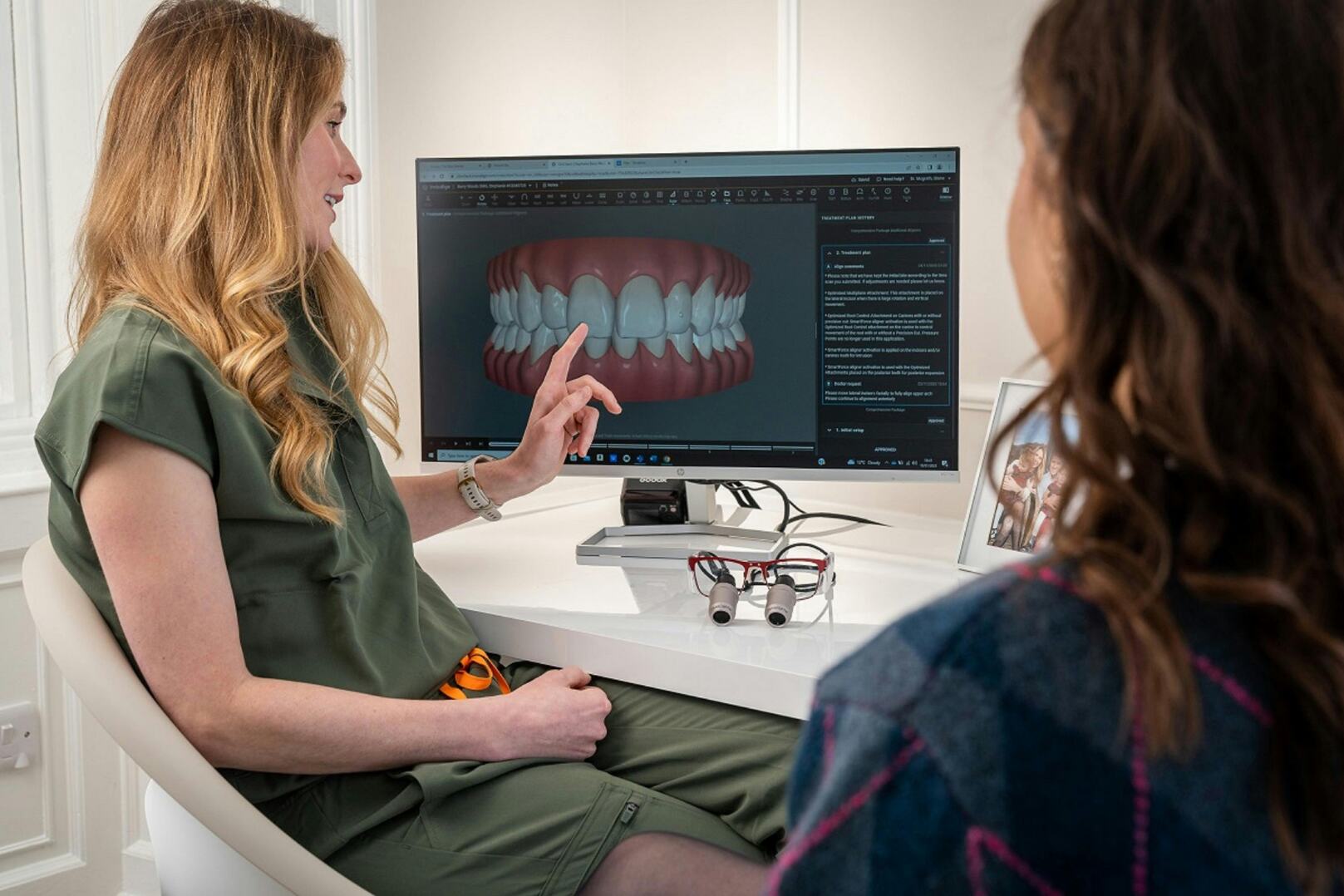
A scan, not an impression
A two-minute iTero scan of your teeth. Nothing in your mouth that sets and nothing to gag on.
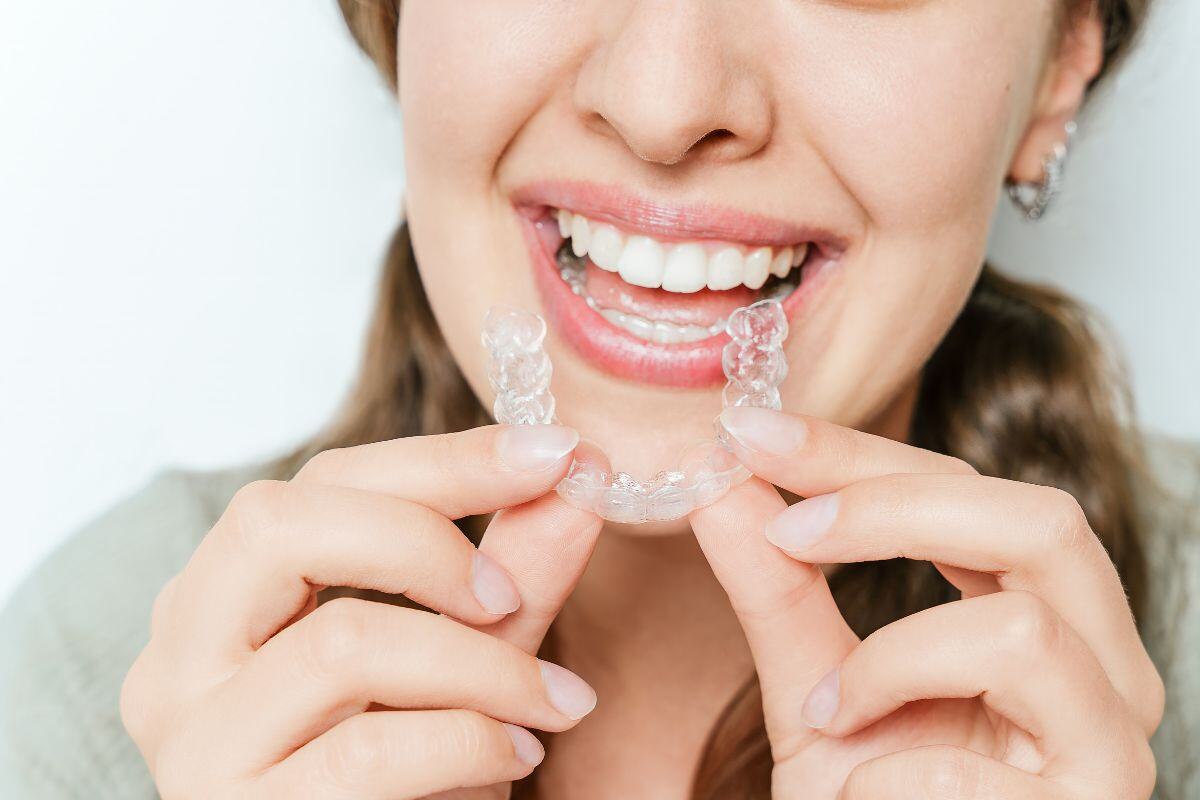
Custom trays made to fit
Trays made to your teeth, so the gel sits where it should and not on your gums. This is the main difference between this and a kit off the internet.

Two weeks at home
Day gel or night gel depending on what suits you, worn according to Cameron’s instructions.
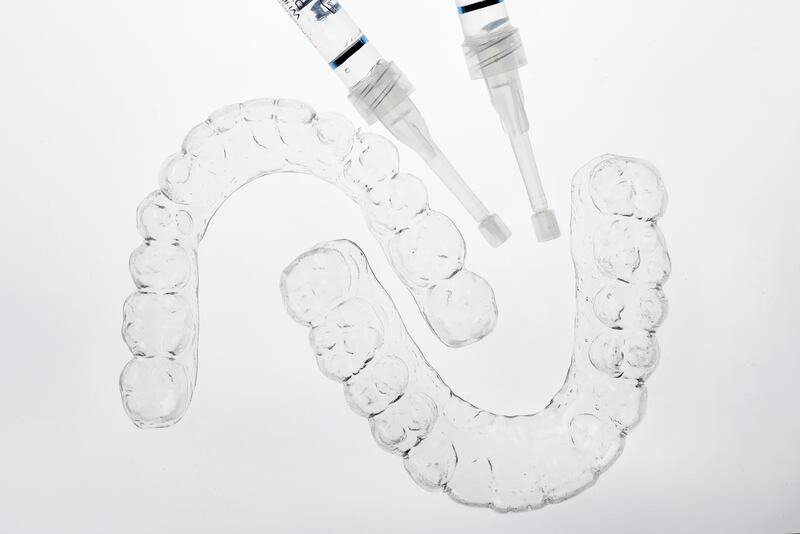
Reviewed, and topped up when needed
You keep the trays. Topping up later costs the price of gel rather than starting again.
What whitening will not lighten
This is the part that catches people out, so it is worth being clear about before you start rather than afterwards.
Crowns, veneers, white fillings and composite bonding do not lighten.
That means if you have existing work at the front and you whiten
A single tooth that has gone dark after root canal treatment will not respond in the same way.
White spots and patches can look more obvious for a while during whitening before they settle.
Grey discolouration from certain medications responds far less predictably than yellowing does.
None of this is a reason not to whiten. It is a reason to have it planned by somebody who is thinking about the whole sequence, which is why whitening always comes before bonding or veneers and never after.
Four reasons to have it done properly
The trays fit
Custom trays keep the gel on your teeth and off your gums, which is most of the difference in both comfort and result.
The strength is prescribed
Legally, whitening at effective concentrations has to be carried out by a dental professional. Beauty salons offering it are breaking the law.
Your teeth are checked first
Whitening over decay or gum disease is a bad idea. An examination comes first for a reason.
Sensitivity is managed, not endured
It is common, it is usually temporary, and there are several ways to reduce it.
On shop-bought kits and salon whitening
Shop-bought kits
Over-the-counter kits are legally limited to a concentration low enough that results are usually modest, and the one-size trays leak gel onto the gums, which is where most of the discomfort comes from. Charcoal pastes and abrasive powders do not whiten teeth at all, they wear the surface, and over time that makes teeth look more yellow rather than less as the layer underneath shows through.
Salon whitening
Whitening offered by beauty salons and non-dental providers is illegal in the UK, not just inadvisable. It falls outside what a dental professional is regulated to do for a reason.
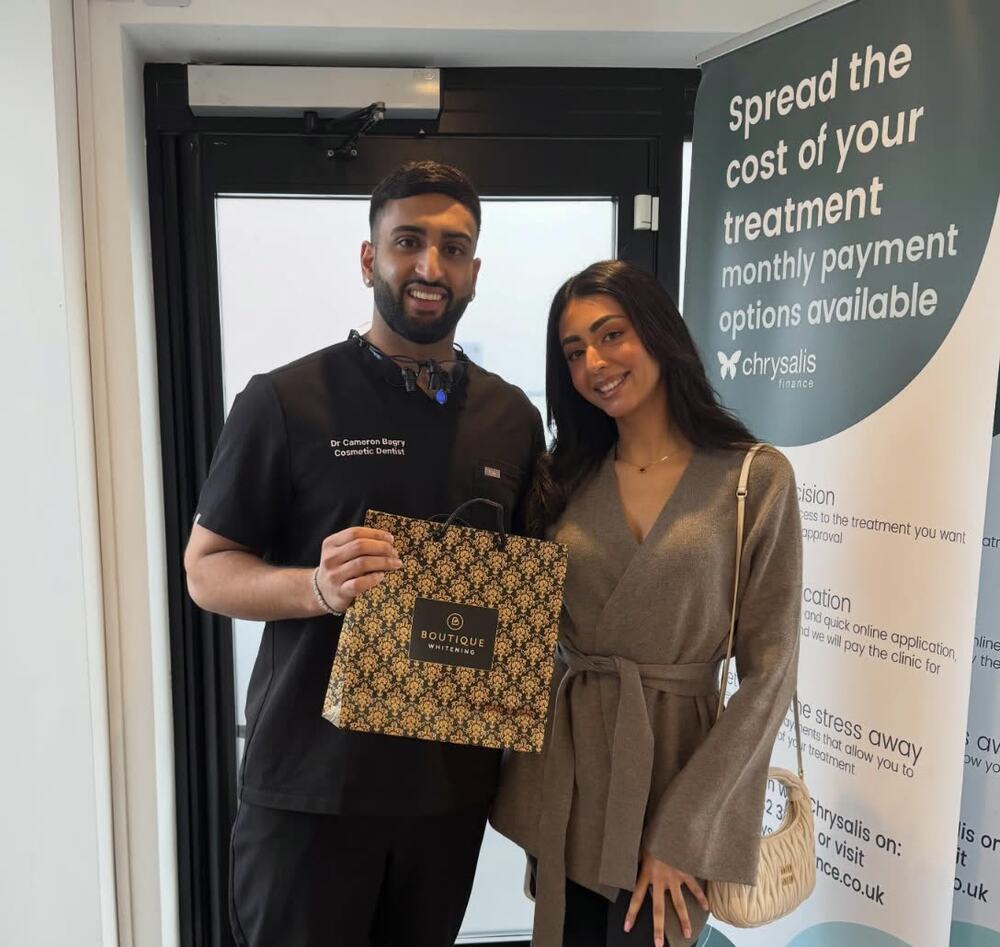
Dr Cameron Bagry · GDC No. 318684
What teeth whitening costs in Telford
Whitening is priced as a complete course including your custom trays and gel, and it is included with Invisalign and veneer treatment. Every from-price sits on one page, and both consultation fees come off your treatment.
See prices and finance

Meet your cosmetic dentist, Dr Cameron Bagry
Cameron is a cosmetic and restorative dentist in Telford. He holds a postgraduate diploma in cosmetic and restorative dentistry and a diploma in minimally invasive dentistry, and Totally Composite, one of the UK’s most respected bonding courses, asked him to be a clinical tutor teaching the technique to other dentists.
He plans every case himself, and seven of the nurses at his own practice have chosen to be treated by him, which is the review he is proudest of. He will also tell you when a smaller plan, or no treatment at all, is the better answer.
The questions patients actually ask about teeth whitening
If your question is not here, no worries. Call our treatment coordinator Ellie or send us a contact form inquiry.
Some sensitivity is common, particularly to cold, and it is usually temporary. Custom trays help a great deal because the gel stays off the gums. If your teeth are already sensitive, tell Cameron at the consultation, because the gel strength and the wear time can both be adjusted, and there are desensitising products that make a real difference.
Professional whitening carried out at prescribed concentrations does not damage enamel. What does damage it is abrasive whitening powders and charcoal pastes, which work by wearing the surface away rather than by lightening it.
It depends on your starting shade and what is causing the discolouration. Yellowing generally responds well. Greyer discolouration, and staining from certain medications, responds less predictably. Cameron will give you a realistic expectation at the consultation rather than a promise.
Usually a year or two before it needs topping up, though that varies with how much tea, coffee, red wine and other staining things you get through, and whether you smoke. You keep your trays, so a top-up costs the price of gel rather than a whole new course.
No. Crowns, veneers, white fillings and composite do not lighten. If you have any of those at the front of your mouth, whitening may leave them looking darker than the teeth around them, and they may need replacing to match afterwards. That gets planned in and priced from the start.
Yes, and you should. Composite and porcelain do not lighten once they are made, so the shade has to be settled first and the new work matched to it. Whitening after bonding is the most common sequencing mistake in cosmetic dentistry.
No. Whitening carried out by anyone who is not a registered dental professional is illegal in the UK. Beyond the legality, nobody has examined your teeth first, and whitening over untreated decay or gum disease is genuinely a bad idea.
Whitening is timed for the end of your alignment rather than the start, because moving teeth into their final positions first means the whole surface lightens evenly. Cameron will fit it into your plan at the right point.
Start with a conversation, not a drill
Leave your number and treatment coordinator Ellie rings you back. Between you, you work out what you actually need, and nothing is booked until you want it to be.