
Smile design in Telford, worn home before it is permanent
Your smile is designed around your face, printed as a trial smile, and fitted so you can eat with it, talk with it and show people. Shape and shade get changed at that stage, not after something permanent has been made.
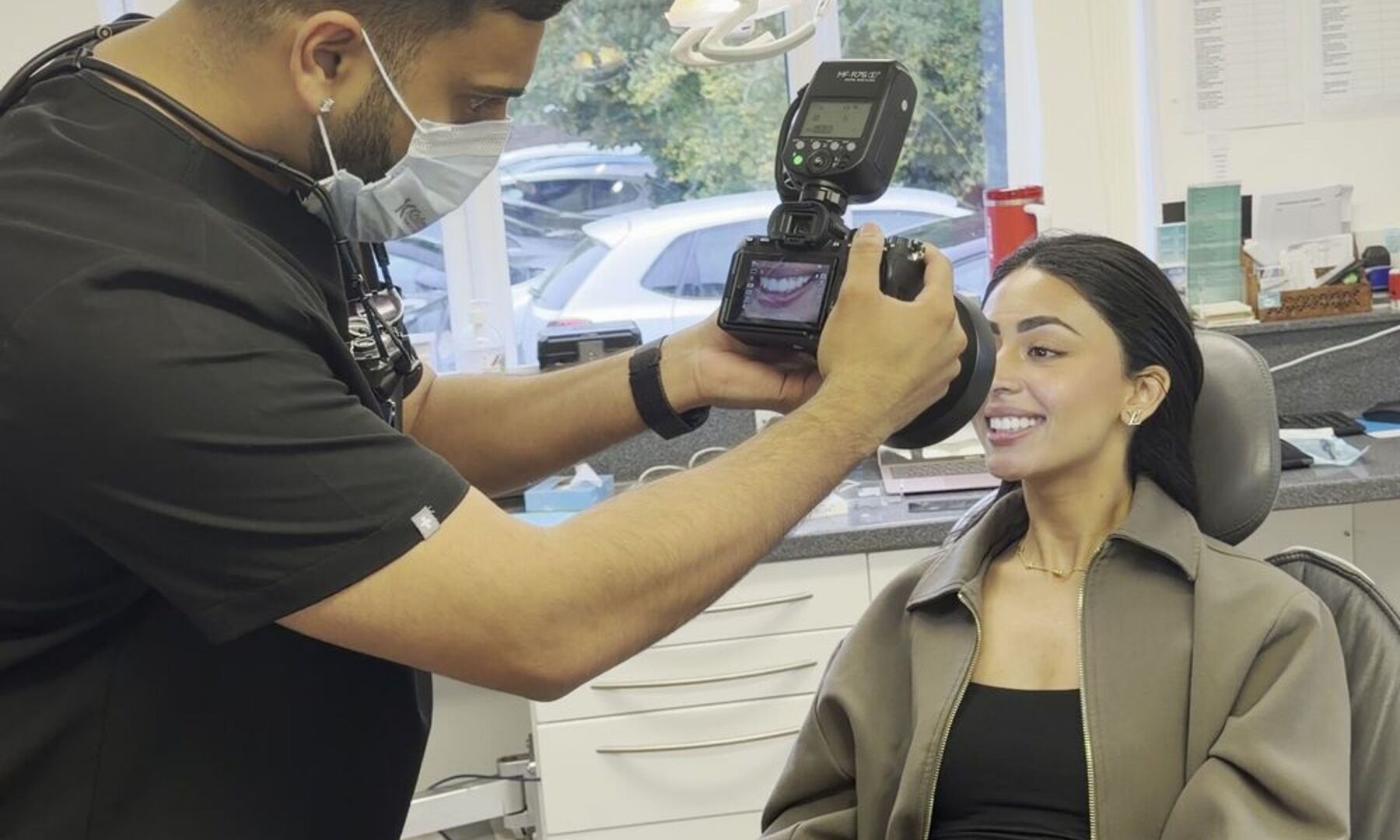

The hardest part of cosmetic dentistry is imagining it
Almost everyone who considers a bigger change gets stuck in the same place. You can see what is wrong. You cannot picture what right would look like on your own face, and you are being asked to commit several thousand pounds and some of your own enamel to somebody else’s judgement of it.
Smile design removes that problem. Instead of describing the result, Cameron builds it, prints it and fits it. You leave the practice wearing your proposed smile, go about your day in it, and come back with an opinion. If the edges are too square, they get softened. If it is a shade too bright for you, it comes down. Nothing permanent has happened yet and nothing has been taken off your teeth.
How your smile is designed
Request a consultation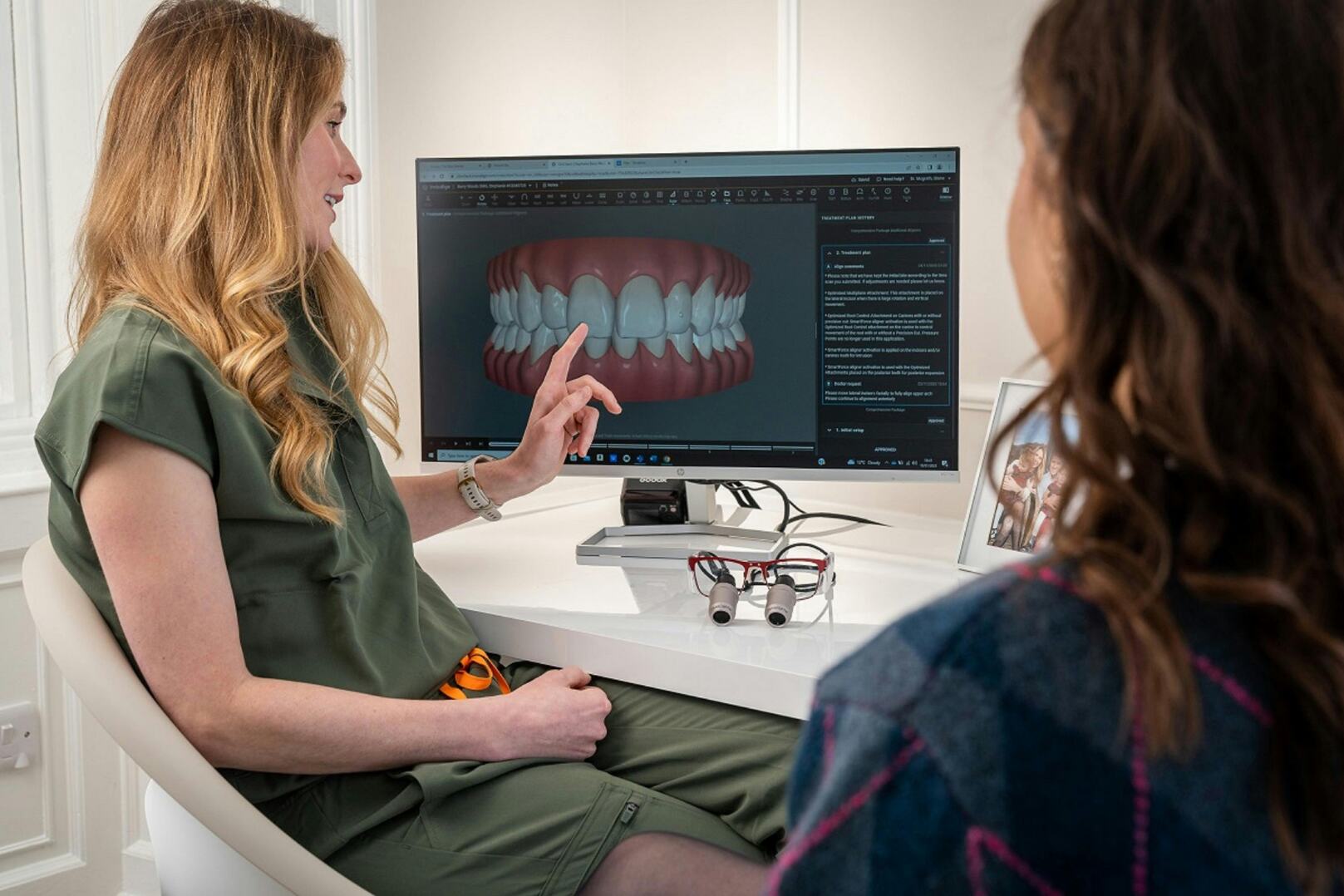
Photographs and a scan
A full photographic series and a two-minute iTero scan. No putty impressions, and nothing sent away in a box.
Facial assessment
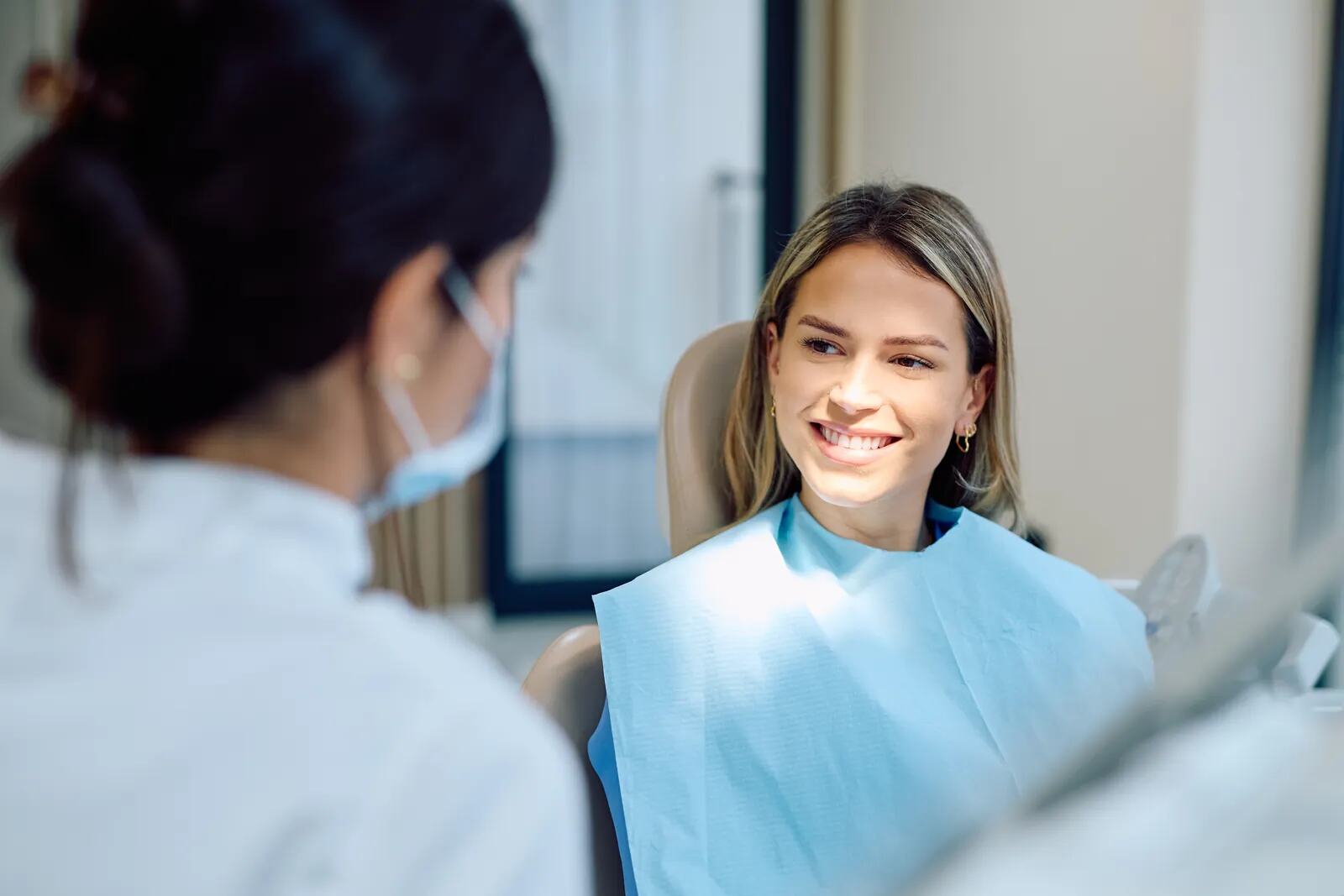
How much tooth shows when you talk, where your lip sits when you smile, how the midline relates to your face, and what your gum line is doing. This is the part that stops a smile looking bolted on.
The design
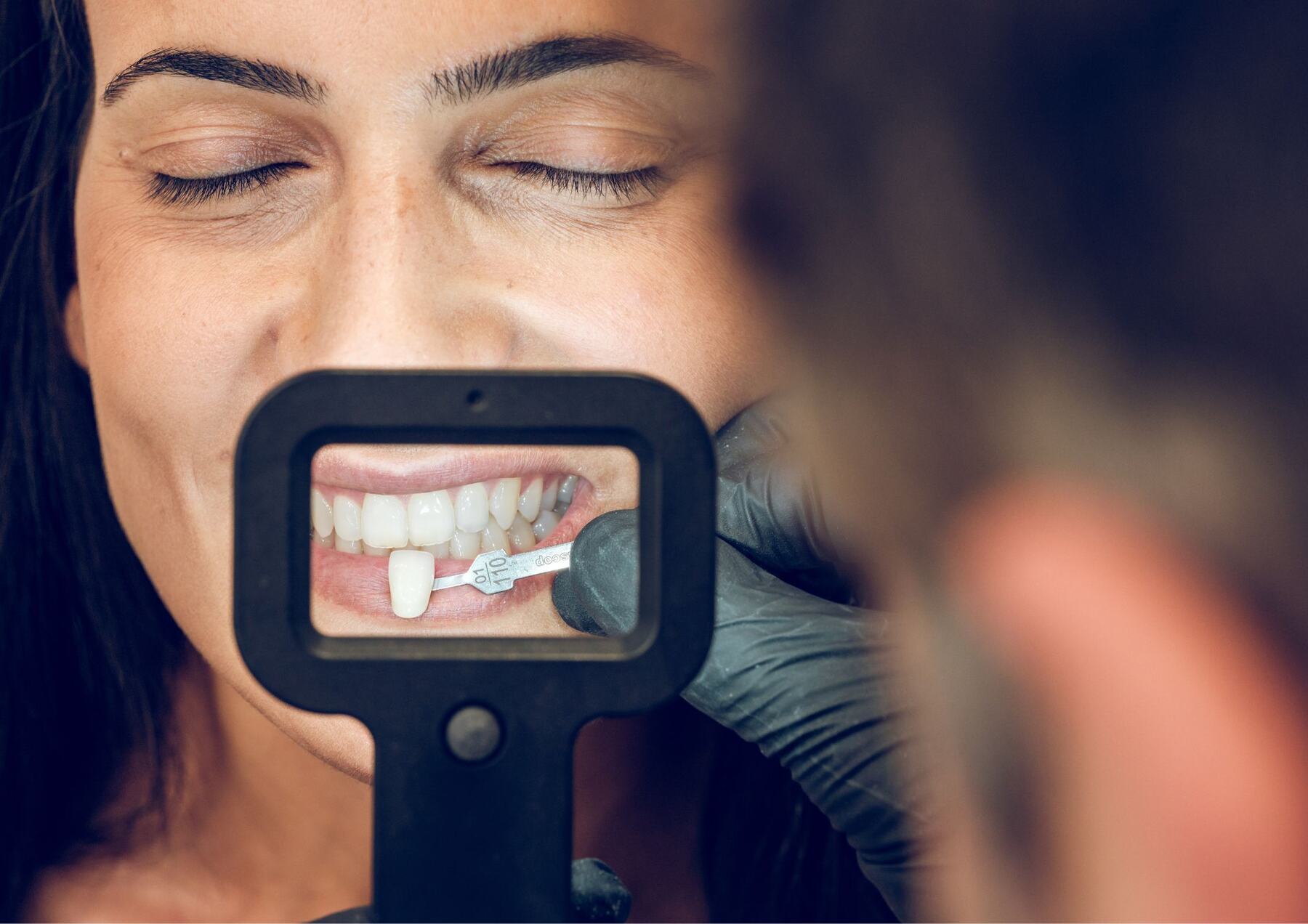
Cameron designs the shapes, proportions and shade himself, around your goals and your face. He does not run the same design for every patient.
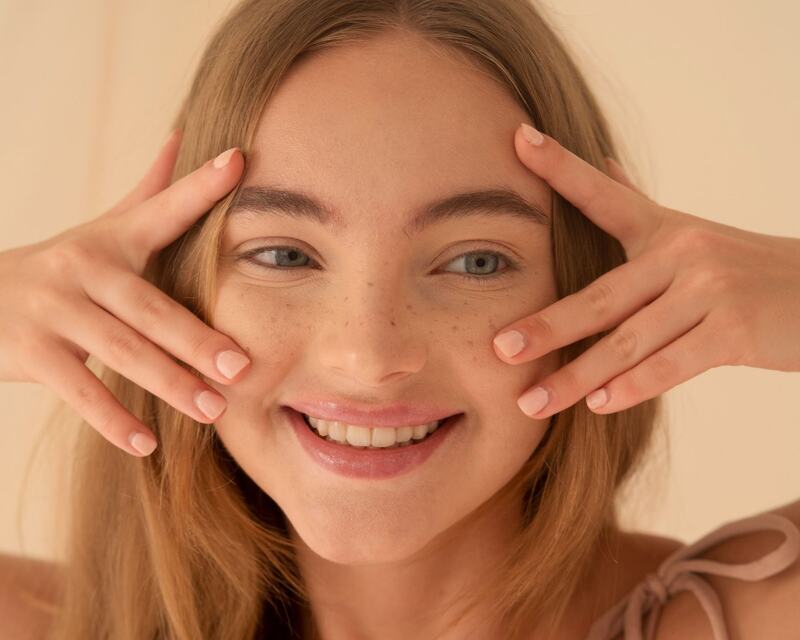
The trial smile
The design is printed and fitted over your teeth so you can eat, talk and show people before anything is decided.
Your changes, then treatment
You tell him what to adjust. The final work is made to the design you approved, not to a guess.
What smile design is used for
The design is the planning
Photographs, an intra-oral scan and an assessment of your face, analysed to work out what should change before anything does. That happens on essentially every case where more than one or two teeth are involved. It is also how Cameron communicates the design to the laboratory, so what gets made matches what was planned rather than what was described over the phone.
The trial smile is the physical stage
The point where the design is printed and fitted so you can wear it out of the building. That earns its place on a narrower set of cases, because on some treatments there is a better way to preview the result.
Where the trial smile is used
Prep-less and minimal preparation veneers — this is the main one, and it is the pathway the trial smile was built around. Also smile makeovers, where several front teeth are changing shape or shade at once. And larger restorative cases, where front teeth are being rebuilt and the proportions need approving before anything permanent is made.
Where the design is used but a trial smile usually is not
For composite bonding, a mock-up at your consultation is normally enough, and composite can be adjusted while it is being placed rather than made in advance. For Invisalign, you see a digital simulation of how the teeth will move instead, which is a different thing and better suited to showing position rather than shape. The same goes for gum contouring, where the design decides how much to reshape and where the new gum line should sit, but the change is measured in millimetres rather than modelled in advance. And for single tooth work, matching the tooth next to it is the job rather than designing a whole smile.
Six things a trial smile settles
Whether the shape suits your face
Square, rounded, soft, defined. Easy to have an opinion on when it is on your own teeth.
Whether the shade is right for you
Most people want less white than they think they do once they see it in daylight.
How much tooth should show
Length is the difference between a natural result and an obvious one.
What other people think
You get to ask the person whose opinion actually matters to you.
How it feels to speak and eat
Not just how it photographs.
Whether you want it at all
Some people wear a trial smile and decide a smaller plan is enough. That is a good outcome, not a failed one.
The honest limits
A preview, not the finished article
Slightly bulkier than the final result
Not a clinical judgement on its own
One stage in a bigger plan
What smile design costs in Telford
Smile design and the trial smile are priced as part of your overall plan rather than separately, and where they sit in the total depends on the treatment they are planning. Every from-price sits on one page, and both consultation fees come off your treatment.
See prices and finance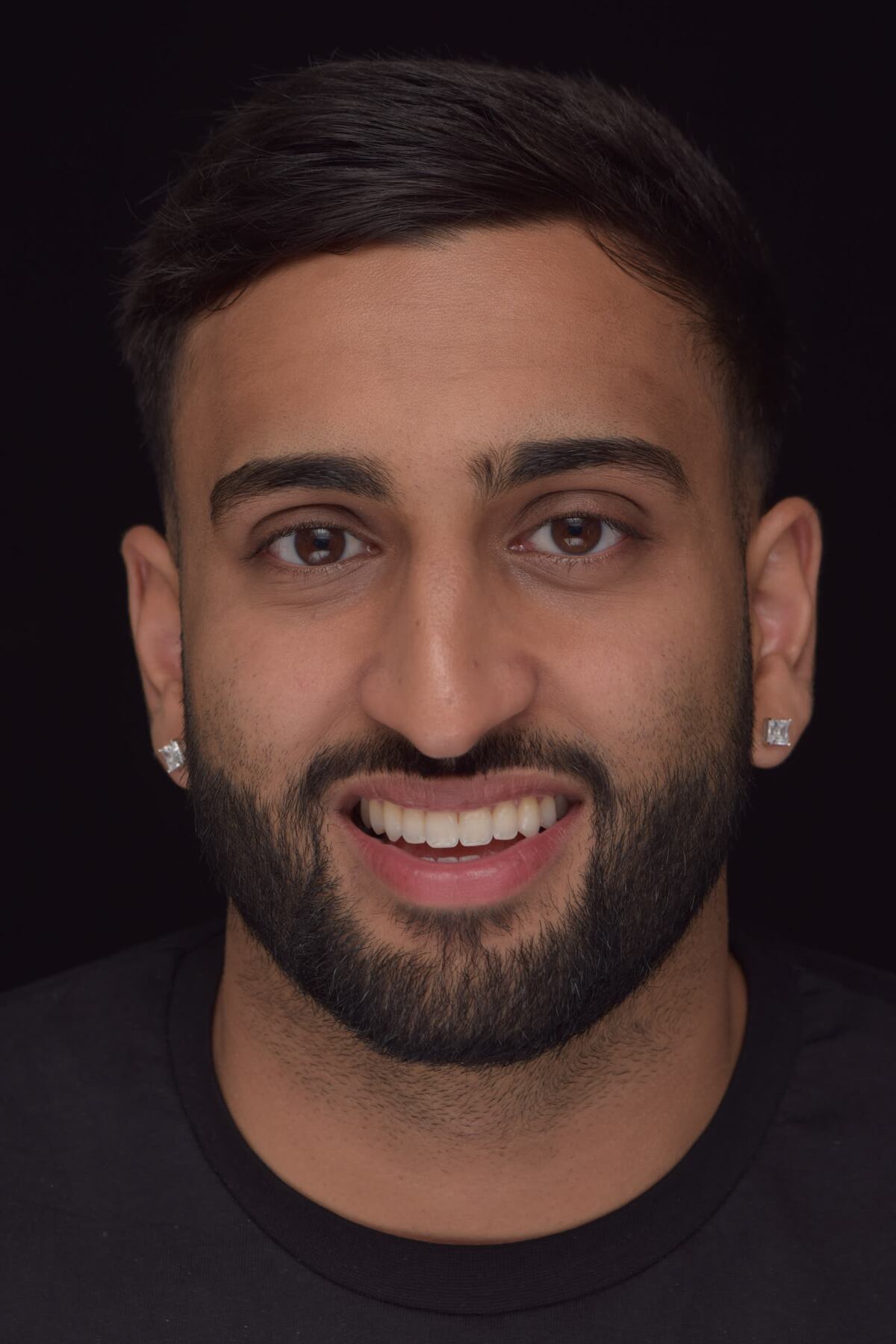

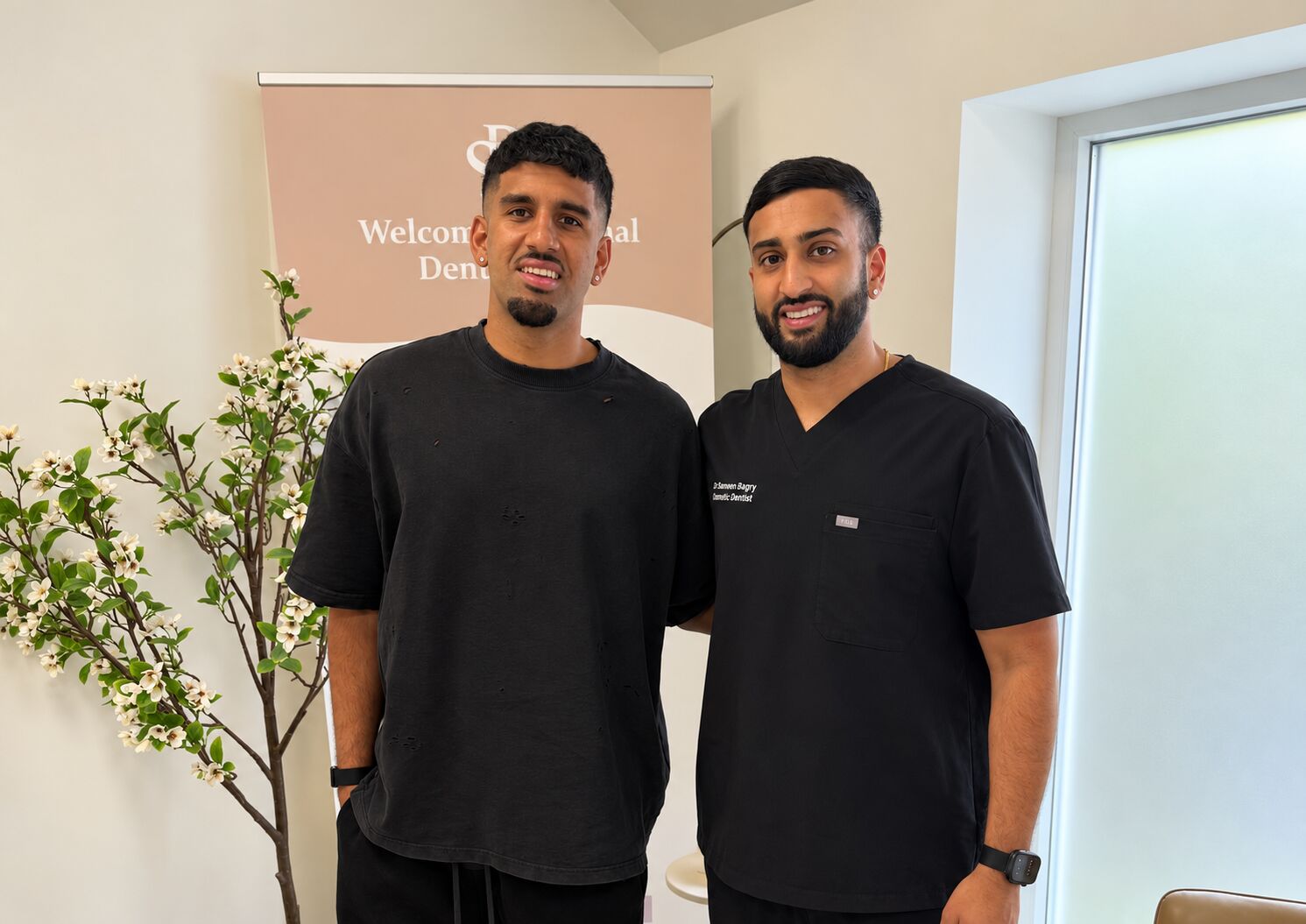
Meet your cosmetic dentist, Dr Cameron Bagry
Cameron is a cosmetic and restorative dentist in Telford. He holds a postgraduate diploma in cosmetic and restorative dentistry and a diploma in minimally invasive dentistry, and Totally Composite, one of the UK’s most respected bonding courses, asked him to be a clinical tutor teaching the technique to other dentists.
He plans every case himself, and seven of the nurses at his own practice have chosen to be treated by him, which is the review he is proudest of. He will also tell you when a smaller plan, or no treatment at all, is the better answer.
The questions patients actually ask about smile design
If yours is not here, ask treatment coordinator Ellie when she rings, or call us. Nobody minds.
Long enough to have a real opinion rather than a first reaction. You go home in it, eat in it, talk in it and show it to whoever you want to show it to, then come back and tell Cameron what to change.
Yes, and you are meant to. That is the entire reason the stage exists. Changes made to a design cost time. Changes made to finished porcelain cost a great deal more than time.
No. Cameron assesses your teeth, gums, bite, facial features and your own preferences before recommending anything, and the design is built from those. A single template applied to every face is exactly what makes cosmetic dentistry look obvious.
No. It is temporary and it is removed before the final work is made. It exists so that the permanent version is made to something you have already approved.
Usually not. For bonding, a mock-up at the consultation is normally enough to show you the idea, and the bonding itself is adjustable while it is being done. The trial smile earns its place on bigger cases and on porcelain, where the work is made in advance.
Yes, it is the same idea. Digital smile design is the term the profession uses for planning a case digitally from photographs and scans. The trial smile is the part where that plan comes off the screen and goes onto your teeth, which is the part patients actually care about.
Start with a conversation, not a drill
Leave your number and treatment coordinator Ellie rings you back. Between you, you work out what you actually need, and nothing is booked until you want it to be.